
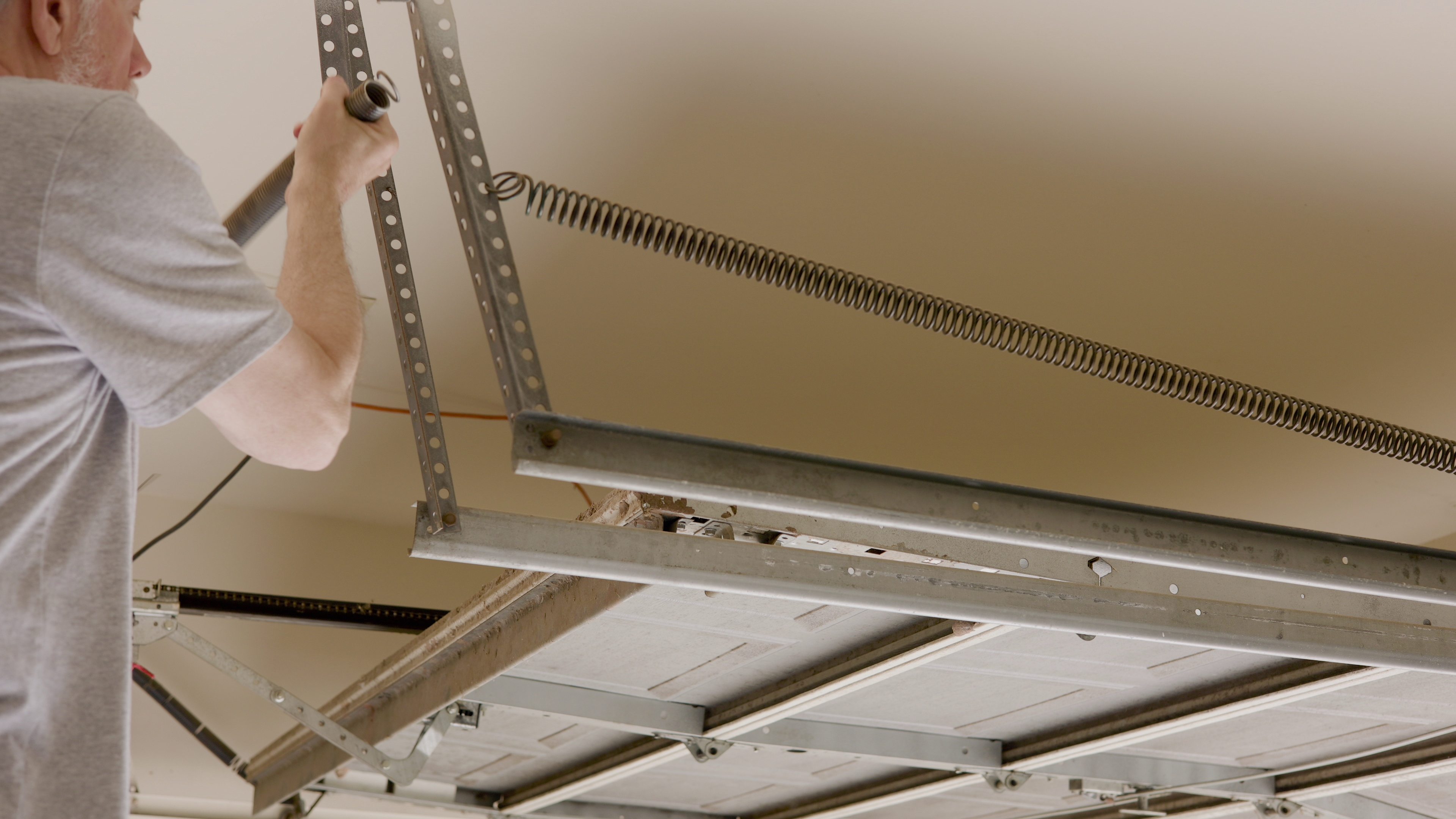
Your garage door spring system handles significant tension every day. Catching warning signs of spring wear helps you maintain a safe, reliable garage door while avoiding emergency repairs and reducing repair costs. Best Overhead Door is here to help.
Visual Warning Signs of Spring Wear
Recognizing signs of a broken garage door spring early prevents system failure. Watch for these visual indicators:
- Gaps in spring coils: Healthy torsion springs have coils that sit flush without spacing. Visible gaps between coils can signal a broken spring or serious spring failure.
- Rust and corrosion: Portland’s high humidity causes garage door springs to rust more quickly. Even surface rust weakens the metal structure and increases the risk of breaking.
- Stretched or sagging appearance: Springs that look elongated have lost their original tension. This wear pattern means the spring can no longer lift the door’s weight properly.
- Unbalanced movement: A door that hangs crooked or tilts to one side indicates uneven spring tension or a broken spring affecting balance.
- Separation at connection points: Springs attach to the shaft and anchoring hardware with mounting brackets. Loose connections or visible gaps indicate structural compromise requiring evaluation.
Performance Changes That Signal Spring Problems
Symptoms of garage door spring failure often appear as performance issues before a complete breakdown. Springs approaching failure create noticeable operational issues:
- Slow opening: Weak springs force the opener motor to work harder than it was designed to. A door that crawls upward instead of moving smoothly needs assessment within days.
- Rapid descent: Springs counterbalance the door’s weight during operation. When they weaken, the door drops quickly when you disconnect the opener or lower it manually.
- Opener strain: Motors that grind, hesitate or reverse unexpectedly often struggle against failing springs rather than experiencing electrical problems. This extra strain damages the opener mechanism.
- Door binds in tracks: A door that catches at angles or resists smooth movement may have uneven spring tension.
Sound Warnings You Shouldn’t Ignore
Springs make distinct noises as they deteriorate. Listen for loud creaking during operation, grinding or scraping sounds when opening, or sudden explosive popping and banging. The last sound often indicates complete spring breakage and immediate danger.
Portland-Specific Maintenance Considerations
Pacific Northwest conditions can make regular spring inspections especially important. The area’s humidity can accelerate rust formation, while fall and winter moisture may contribute to wear on metal components.
Why Early Detection Matters
Addressing spring problems before catastrophic failure helps prevent dangerous situations. Scheduled spring replacement can help you avoid the added stress and potential costs of emergency service calls. Early intervention helps prevent secondary damage to garage door cables, opener mechanisms and door panels. You reduce safety risks to family members and vehicles.
Take Action Before Complete Failure
If you’re unsure how to tell if your garage door spring is broken, schedule an inspection within one or two weeks. Stop using the door immediately if you observe severe symptoms like visible breakage or extreme unbalanced movement.
Best Overhead Door serves homeowners throughout the Portland Metro area and Vancouver, Washington, with honest assessments and expert spring services. With over three decades of local experience, we install high-quality replacement springs designed for durability. We offer 24/7 emergency availability, a basic service call starting at $49 and warranty options for broken spring replacements.
Act now to help prevent spring failure. Contact us today for a no-pressure evaluation of your garage door system.